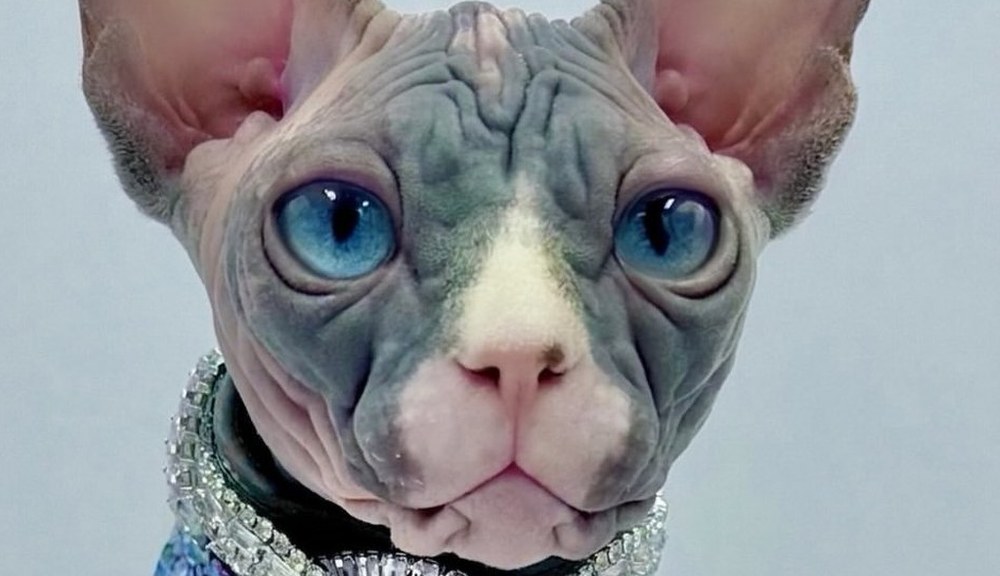
Dominant Odd Eyes in Sphynx Cats: The Rarest Look in the Breed
Two different coloured eyes in one cat is the look that stops people mid-sentence, and it is the thing we have deliberately specialised in. The proper term is complete heterochromia, and how a cat comes by it matters more than most people realise.
Where eye colour comes from
All kittens are born with blue eyes. Pigment migrates into the iris over the following weeks, and the adult colour settles somewhere between six weeks and a few months old. Blue is not a pigment at all — it is what you see when there is very little melanin in the iris, scattering light in much the same way the sky does.
An odd-eyed cat therefore has one iris that received pigment and one that did not.
The usual route: the white spotting gene
In most odd-eyed cats the cause is white in the coat. The dominant white and white spotting genes interfere with the migration of pigment cells during development, and eyes are affected along with skin. That is why odd eyes are common in white and bicolour cats and why so many odd-eyed cats have a white patch on the head.
The same mechanism is behind the association between white coats, blue eyes and congenital deafness — pigment cells matter to the inner ear as well as the iris. Being odd-eyed does not mean a cat is deaf, and a deaf cat is not thereby impaired: our Donald is deaf, entirely confident, and reads movement and vibration so well that visitors do not notice.
The pointed route
Pointed cats — the Siamese-type pattern — carry a temperature-sensitive form of albinism that produces blue eyes independently of white. When those lines meet a pigmented iris, you get a different flavour of odd-eyed cat again, often paired with dramatic colour on the skin.
Why “dominant” odd eyes are the interesting version
Odd eyes that arise from white spotting are, in effect, a happy accident: the pattern determines whether the eyes are affected, and even carefully planned pairings produce them inconsistently. What we work towards is odd eyes that come through as a dominant, reliably inherited trait rather than a lottery — which means selecting the cats that actually pass the look on, generation after generation, and keeping the records to prove where it came from.
That is slower and less glamorous than it sounds. It is also the reason our kittens look the way they do, and why “specialising in dominant odd eyes” is on the front of this site rather than being a tagline we borrowed.
Caring for an odd-eyed cat
No special treatment. The blue eye has less pigment, so bright sun can be uncomfortable — shade and sensible window management are enough. Blue eyes photograph beautifully and flare in a flash, so shoot in soft daylight if you want the colour to read true. And if your cat happens to be deaf as well, the rules are simple: keep them safely inside, wake them by touch rather than by voice, and otherwise get on with it. They do.
Caring for and photographing odd eyes
Odd-eyed cats need no special medical care, but the eyes themselves are worth keeping clean and are surprisingly hard to photograph — bare skin reflects light and a phone flash flattens the colour that makes the cat.
Unscented wipes for eye corners
A daily wipe of the corner of the eye, which a coated cat would groom away itself.
Plain photography backdrop
A flat background is what lets two different eye colours read in the same frame.
These are Amazon affiliate links. If you buy through one it can earn us a small commission at no extra cost to you. We only list things we own or would buy again — the full list is on Our Favourite Things, and how we handle commercial relationships is set out in our affiliate and editorial disclosure.
Meet the cats behind the advice
Everything here comes out of running a household of Sphynx and Donskoy cats — meet the queens, studs and kittens, or send us an enquiry if you have a question we have not answered.
Frequently asked questions
- What causes odd eyes in cats?
- The white spotting gene interrupts pigment migration to the iris. If one eye gets no melanin it stays blue, giving heterochromia alongside a green, gold or copper eye.
- Are odd-eyed Sphynx cats rare?
- Odd eyes are uncommon in the breed and unpredictable in most lines, which is why catteries that consistently produce them select for it deliberately.
- Do odd-eyed cats have health or hearing problems?
- Odd eyes themselves do not affect sight. Deafness is linked to white coat and blue eyes, so a white, blue-eyed cat may be deaf on one or both sides — worth testing, not assuming.
- Can you breed for odd eyes?
- To a degree. You select parents with the right white spotting expression and track outcomes over litters; no pairing guarantees an odd-eyed kitten.