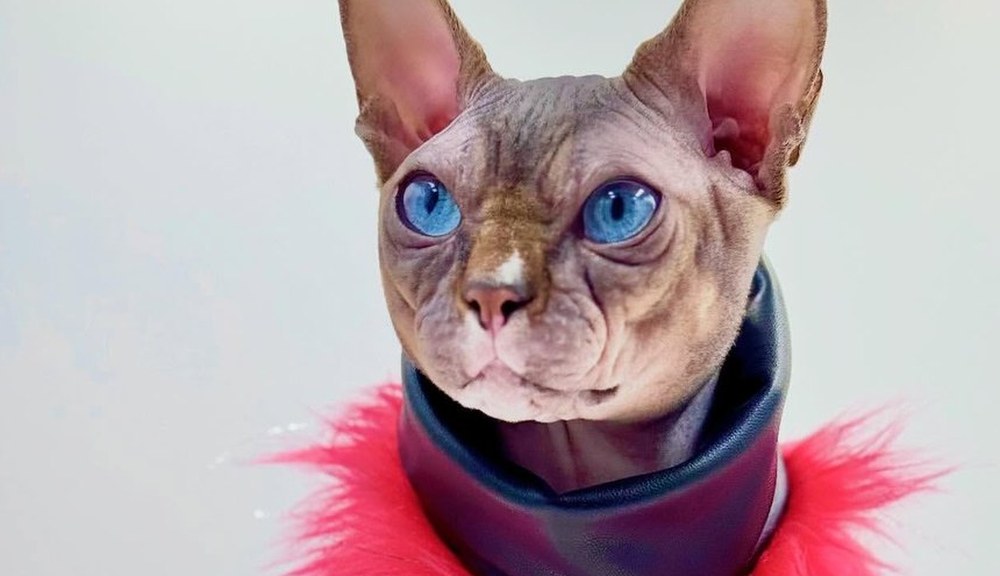
Keeping a Hairless Cat Warm: Heating, Bedding, Sunburn and Seasons
A hairless cat has no insulation, so warmth stops being a comfort question and becomes part of the husbandry. None of it is complicated; it is mostly about giving the cat options and then noticing which one it chooses.
House temperature
Keep the house at a temperature you would be comfortable in wearing a t-shirt, and let the cat tell you the rest. A cold Sphynx is easy to read: hunched, tucked, tail wrapped tight, wedged against a heater or under a blanket, and following the sun around the house. A comfortable one sprawls.
Overnight matters more than daytime, because that is when heating goes off and temperatures drop. Most Sphynx cats solve this by getting into bed with you, which is genuinely the warmest option available to them.
Beds and bedding
Give them enclosed, insulated places to burrow: covered beds, igloos, deep cushions, a basket of blankets. Fleece and knits hold heat far better than a flat pad. Position beds away from draughts and off cold tile, and put one wherever the household actually sits, because they would rather be near you than warm alone.
Heated beds are worth it in winter, with two rules: it must be a pet-specific product with a thermostat and a chew-resistant cord, and the cat must always be able to move off it. Never confine a cat to a heat source, and do not use a human electric blanket or an uncovered heat pad. A wrapped warm water bottle is a decent low-tech alternative.
Clothing through the seasons
Light cotton in the warmer months, mostly to catch skin oil. Knits and fleece in winter, especially for cats who sleep away from the household’s warm spots or who live somewhere genuinely cold. Nothing tight, nothing with rough seams, nothing left on an unsupervised cat that could snag. Wash it regularly — it is sitting against bare skin.
Sunburn is the other half of the problem
The same lack of coat that loses heat also lets UV straight onto skin, and pale or white cats burn readily. A hairless cat baking in a sunny window is getting a real dose. Manage it with shade, blinds during peak hours, and a light long-sleeved sun shirt for cats who insist on the window seat. Do not apply human sunscreen — many ingredients, zinc oxide among them, are toxic if licked, so ask your vet if you want something topical.
Watch for pink, warm or flaking skin on ears, nose and shoulders, and see a vet for anything blistered, sore, or any lump or patch that is changing.
Outside, cars and travel
These are indoor cats. If yours goes into a secure enclosure or on a harness, dress for the weather, keep it short, and avoid the middle of the day in summer and anything cold and windy in winter. In the car, never leave a cat in a parked vehicle in any weather, and line the carrier with fleece for winter trips — a carrier on a cold floor is colder than the room.
The short version
Warm house, enclosed bedding, a safe heated bed in winter, cotton in summer and knits in the cold, shade from the midday sun, and a cat that is allowed to choose. Do that and a hairless cat is as robust as any other — usually while lying on top of you.
The warmth kit
Warmth for a hairless cat is layers, not one gadget: a warm room, something to wear, a heat source they can move off, and somewhere covered to burrow.
Adjustable-temperature heating pad
Adjustable heat and a chew-resistant cord. Cover part of the bed only, so the cat can always move off it.
Large heated pad with chew-resistant cord
Big enough for two cats, which is what actually happens.
Self-warming mat, no power
Nothing to plug in — what we use for kittens and for rooms with no free socket.
Fleece-lined shirt for cold mornings
Clothing does the insulating the coat would have done, and costs nothing to run.
These are Amazon affiliate links. If you buy through one it can earn us a small commission at no extra cost to you. We only list things we own or would buy again — the full list is on Our Favourite Things, and how we handle commercial relationships is set out in our affiliate and editorial disclosure.
Meet the cats behind the advice
Everything here comes out of running a household of Sphynx and Donskoy cats — meet the queens, studs and kittens, or send us an enquiry if you have a question we have not answered.
Frequently asked questions
- What temperature should a house be for a Sphynx cat?
- Around 22–24°C (72–75°F) as a baseline. If you are comfortable in a t-shirt, the cat is usually fine; if you reach for a jumper, so should the cat.
- Are heated beds safe for cats?
- Yes, when they are thermostat-controlled, pet-specific, chew-resistant and placed so the cat can move off the heat. Never use a human electric blanket unattended.
- Can Sphynx cats get sunburnt?
- Easily. Bare skin burns through glass, so use window film or shade at the sunniest spots, limit sunbathing sessions, and never use human sunscreen on a cat.
- Do Sphynx cats need coats in winter?
- Indoors, a soft top or fleece is usually enough. Outdoors in cold weather they should not be out at all beyond brief, supervised, well-covered trips.