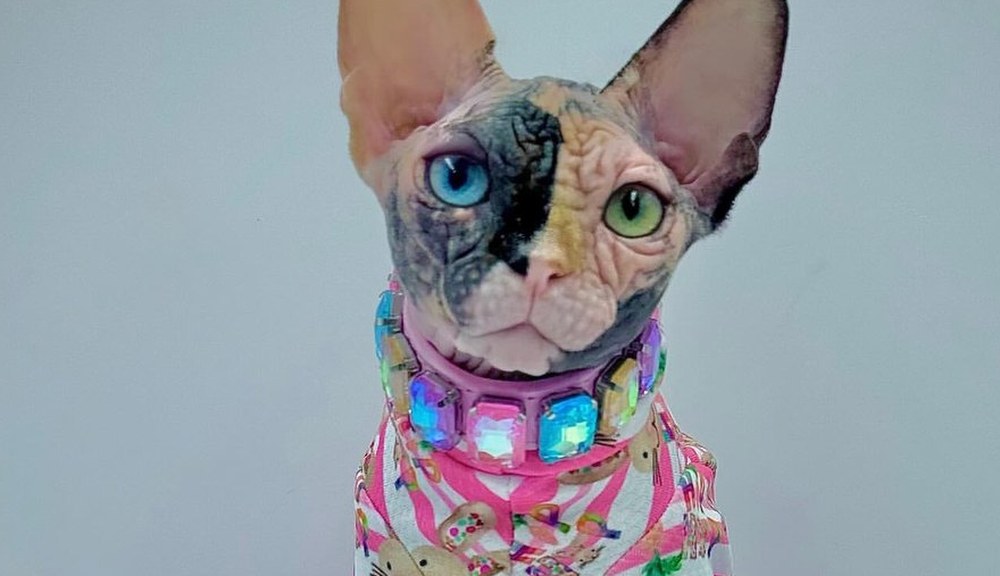
Sphynx Cat Blackheads: Feline Acne, Chin and Tail
Every new Sphynx owner finds them eventually: little black specks along the chin, sometimes down the tail, that look like dirt and do not wipe off. They are blackheads — comedones — and on a hairless cat they are simply visible in a way they never are on a coated one.
What they actually are
A blackhead is a hair follicle plugged with keratin and sebum. The dark colour is oxidation, not dirt, which is why scrubbing achieves nothing except an irritated cat. When enough of them cluster together on the chin it is called feline acne, and it happens in every breed — you can just see it on a Sphynx.
Hairless cats do produce a noticeable amount of skin oil, because the oil that would normally be distributed along a coat has nowhere to go. That oil, plus skin cells, plus friction from bedding and bowls, is the whole story.
Where they turn up
- Chin — the classic spot, and the one most often linked to plastic food and water bowls.
- Base of the tail — “stud tail”, most obvious in entire males but not exclusive to them.
- Skin folds and armpits — where oil collects and fabric rubs.
- Around the nipples and the belly — usually harmless and usually left alone.
What we actually do about it
The routine that keeps our house clear is dull and unglamorous, which is the point:
- Wipe the chin every day or two. A soft unscented pet wipe, one gentle pass, no pressure. Most cases never need more than this.
- Bathe on a regular schedule. A gentle, unscented shampoo formulated for cats, and a proper rinse — leftover product irritates skin far more than the oil does. Our bathing guide has the frequency and the method.
- Throw out the plastic bowls. Plastic scratches, holds bacteria and is repeatedly associated with chin acne. Stainless steel or ceramic, washed daily.
- Wash the bedding weekly. Skin oil transfers into fabric fast, and a cat sleeping face-down on last week’s blanket is re-applying it every night.
- Change clothes daily. The same logic — a jumper worn for three days is an oil compress.
- Warm compress for a stubborn patch. A clean cloth, warm water, a minute or two. It softens the plug without damaging the follicle.
What not to do
- Do not squeeze them. You will rupture the follicle and turn a cosmetic blemish into an infection.
- Do not use human acne products — benzoyl peroxide, salicylic acid and medicated face washes are formulated for human skin at human concentrations, and cats groom themselves. Anything medicated is a vet decision.
- Do not scrub or exfoliate. Bare skin has no coat to protect it; abrasion makes the oil production worse.
- Do not bathe daily to fix it. Stripping the skin prompts it to produce more oil, which is the opposite of the goal.
When it is a vet problem, not a grooming problem
Blackheads on their own are cosmetic. Book a vet appointment if you see any of the following, because these are infection or an underlying skin condition rather than trapped oil:
- Red, swollen or hot skin around the spots.
- Pustules, crusting, bleeding or a discharge.
- The cat scratching the area, or flinching when it is touched.
- Hair loss around the chin in a partly coated cat, or a spreading rash.
- No improvement after a few weeks of a consistent, gentle routine.
This is general care information from a breeding household, not veterinary advice — a vet can culture the skin and prescribe properly, and for a genuinely infected chin that is the shortest route to a comfortable cat.
The kit we keep for it
Nothing here is specialist. It is the same short list we hand to every kitten buyer, and all of it is on Our Favourite Things.
Unscented hypoallergenic pet wipes
The daily chin wipe. Unscented matters — fragrance on bare skin is an irritant looking for a place to happen.
Approved by Diva
Fragrance-free hypoallergenic cat shampoo
Gentle enough for a regular bath schedule without stripping the skin and provoking more oil.
Approved by Bubbles
Stainless steel elevated cat bowls
Replacing plastic bowls is the single change that most often clears a stubborn chin.
Approved by Duke
These are Amazon affiliate links. If you buy through one it can earn us a small commission at no extra cost to you, and it does not change what we recommend.
Meet the cats behind the advice
Everything here comes out of running a household of Sphynx and Donskoy cats — meet the queens, studs and kittens, or send us an enquiry if you have a question we have not answered.
Frequently asked questions
- Why does my Sphynx have blackheads on its chin?
- The follicles on the chin plug with skin oil and keratin, and rubbing against food bowls makes it worse. Plastic bowls are the most common single cause; switching to steel or ceramic often clears it on its own.
- Should I squeeze my cat's blackheads?
- No. Squeezing ruptures the follicle and turns a cosmetic blemish into an infection that then needs veterinary treatment.
- Can I use human acne wash on a Sphynx?
- Not without a vet saying so. Benzoyl peroxide and salicylic acid products are made for human skin at human strength, and a cat grooms whatever you put on it.
- How often should I clean a Sphynx chin?
- A gentle pass with an unscented wipe every day or two, plus the normal bath schedule. Daily bathing is counterproductive — stripping the skin makes it produce more oil.
- When do Sphynx blackheads need a vet?
- If the skin is red, swollen, crusting, bleeding or sore to touch, or the spots are not improving after a few weeks of a consistent gentle routine. That is infection or an underlying skin condition rather than trapped oil.