Sphynx Cat Colours and Patterns — Including the Ones With Hair
A hairless cat still has a colour. The pattern is in the skin — pigment shows through as clearly as it would in a coat, and in some ways more so, because you are seeing the markings drawn directly on the cat.
The colours you will see
Sphynx cats come in essentially the full domestic range: solid black, blue, chocolate, lilac, cinnamon, fawn, red and cream; white and bicolour; tortoiseshell and blue-cream; smoke; and the pointed pattern seen in Siamese-type cats, where the extremities are darker than the body. Skin tone gives the whole thing a slightly muted, suede-like look compared with fur.
Patterns, drawn on skin
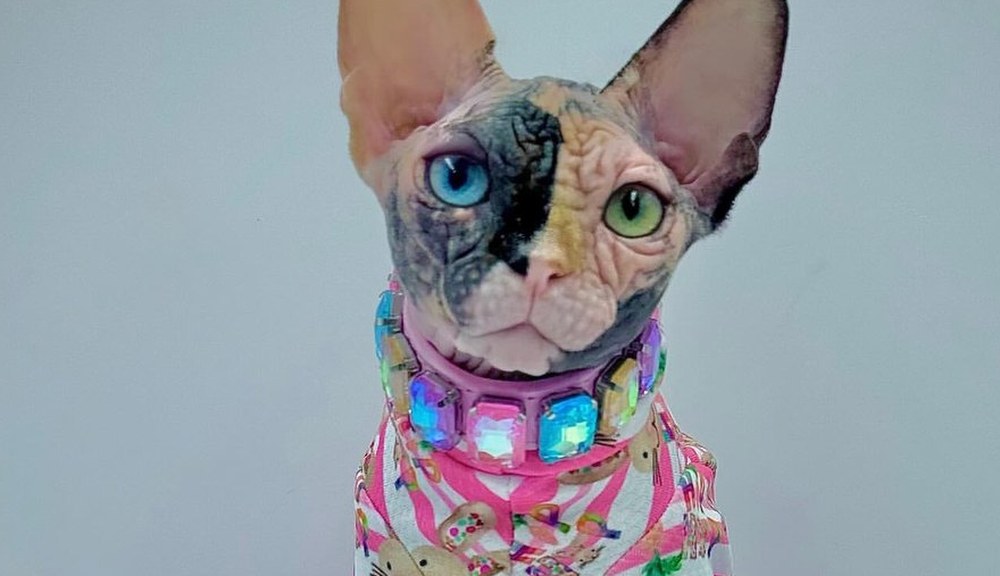
Tabby markings — mackerel stripes, classic swirls, spots and ticking — appear as pigment patterns on the skin, so a tabby Sphynx really does look drawn on. Bicolour and van patterns show as crisp blocks of colour against pale skin. Tortoiseshell can be the most striking of all: instead of the fine mottling you get in fur, tortie skin often shows bold patches, which is why our Diva reads as blocks of colour rather than a blend.
Why some Sphynx cats have hair
Because the Sphynx gene reduces coat rather than abolishing it. Most Sphynx are covered in a fine down like the skin of a peach, and fuzz commonly persists on the face, ears, feet and tail — the bridge of the nose is almost always slightly furry. Some individuals carry noticeably more, particularly as kittens, and some grow patchy fuzz in cold weather and lose it again when it warms up.
Kittens are often fuzzier than the adult they become, so a coat at eight weeks does not tell you what the cat will look like at two years. None of this is a defect; it is the range the gene produces.
Donskoy coat types are a different system
Because Donskoy hairlessness is a dominant mutation, the breed produces distinct types: rubber-bald cats with no covering at all, flock cats with a fine suede-like layer, velour cats born with a coat that thins as they grow, and brush cats that keep a wiry patchy coat. Seasonal change is common. If a hairless cat’s coat appears and disappears through the year, this is usually why.
Does colour affect anything practical?
Only sun exposure. Pale and white skin burns more easily, so a light cat in a sunny window needs shade, a sun shirt, or both. Beyond that, colour is aesthetics — and with these cats, half the aesthetic is what they are wearing over the top of it.
Photographing a hairless cat’s colour
Sphynx colour is easy to lose to a phone camera: the skin reflects, and a dark cat against a dark sofa becomes a silhouette. A plain backdrop and warm light are most of the fix.
Plain photography backdrop
What we shoot kitten portraits against. A flat background is what makes markings readable.
Bowtie collar with bell
For portraits and visitors. Breakaway only, and off again afterwards.
These are Amazon affiliate links. If you buy through one it can earn us a small commission at no extra cost to you. We only list things we own or would buy again — the full list is on Our Favourite Things, and how we handle commercial relationships is set out in our affiliate and editorial disclosure.
Meet the cats behind the advice
Everything here comes out of running a household of Sphynx and Donskoy cats — meet the queens, studs and kittens, or send us an enquiry if you have a question we have not answered.
Frequently asked questions
- What colours do Sphynx cats come in?
- All of them: black, blue, white, red, cream, chocolate, lilac, with tabby, tortie, bicolour, colourpoint, mink and sepia patterns visible as pigment in the skin.
- Why does my Sphynx have hair?
- Because the KRT71 variant reduces hair rather than removing it. Fine down on the body and denser hair on the nose, ears, feet and tail is normal and can change with age and season.
- Do Sphynx cats change colour?
- Their skin darkens with sun exposure and can lighten again, so the same cat can look noticeably different between summer and winter.
- How are Donskoy coat types different?
- Donskoys are grouped as rubber bald, flocked, velour and brush — several are born with coat and lose it, which does not happen the same way in the Sphynx.