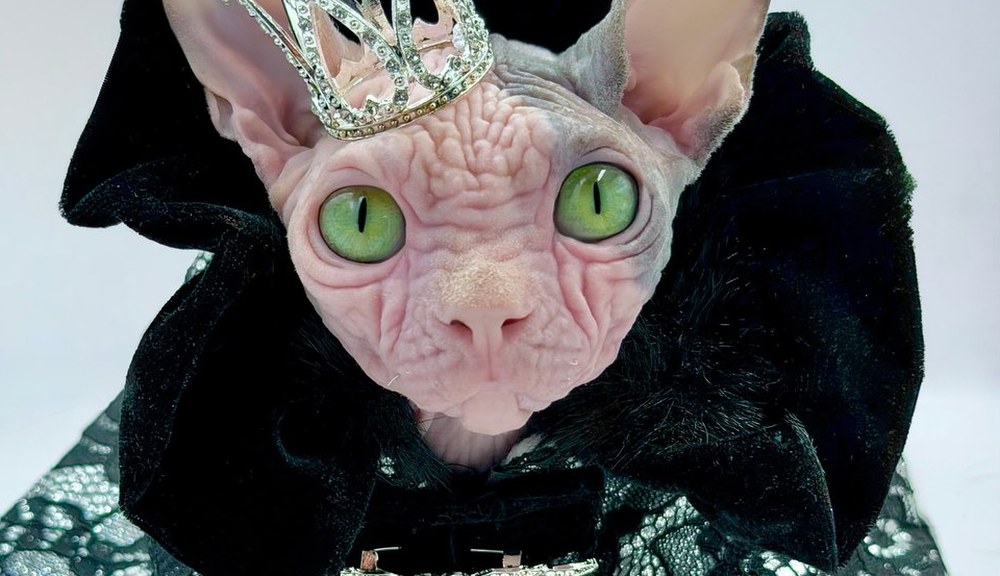
Sphynx Cat Personality: Why They Act More Like Dogs Than Cats
People describe Sphynx cats as dog-like, and it is a lazy comparison that happens to be accurate. They greet visitors, they follow you between rooms, they come when called if there is anything in it for them, and they treat closed doors as an insult.
The traits that hold across the breed
- Relentlessly social. They want to be in the room, then on the chair, then on you. Being ignored is not tolerated.
- Physically affectionate. Under the blanket, against skin, on your chest at 3am. Partly love, partly warmth economics.
- Vocal. Not a Siamese-level monologue, but they comment, and they are persistent about mealtimes.
- Clownish. Acrobatics, ambushes, sprints, and a complete absence of dignity.
- Clever and busy. They open things, investigate everything, and get into trouble when bored.
- Attention-seeking, not aloof. Which is exactly why they suit some households and are wrong for others.
Where individuals differ — our own cats as the example
Breed gives you a range; the cat gives you the specifics. Bubbles is the professional, entirely comfortable with a camera and the one designers ask for by name. Duke poses unprompted, shows his belly to strangers, and will explain himself at length. Diamond — Squeak at home — stares in ice-blue until treats appear and gets into absolutely everything. Devil earned her name and is loved more for it. Daisy supervises the household whether asked or not. Donald is deaf and completely unbothered, and if anything is the most confident cat in the house.
Same breed, same house, six different animals. Anyone promising you a temperament to order is selling something.
What a deaf cat teaches you about temperament
Donald cannot hear a thing and it changes almost nothing. He reads movement, vibration and body language, he plays as roughly as anyone, and he sleeps in the middle of the pile. Deafness in a cat is a management consideration — never let them outside unsupervised, wake them by touch not sound — not a personality.
Who this breed suits
Households with people around, or with other pets for company. People who want interaction rather than decoration. Families who do not mind an audience. They are excellent with children who have been taught to handle a cat properly, and they generally get on well with dogs.
Who should choose another breed
Anyone out of the house twelve hours a day with no second pet. Anyone who wants a quiet, independent cat that keeps to itself. Anyone who needs their belongings, food and personal space respected — because none of that is on offer here.
What keeps a dog-like cat occupied
A Sphynx does not entertain itself for long. The cats that get into trouble are the bored ones, so this is the kit that soaks up the hours between laps.
Collapsible crinkle play tunnel
Endlessly interesting and it folds flat, which is the only reason we still own one.
Interactive hide-and-seek feather toy
For the stretch of the evening when nobody in the house has hands free.
Escape-proof harness with handle
Sphynx cats walk on a harness more readily than most breeds — but a hairless cat needs shade and sense about sun.
These are Amazon affiliate links. If you buy through one it can earn us a small commission at no extra cost to you. We only list things we own or would buy again — the full list is on Our Favourite Things, and how we handle commercial relationships is set out in our affiliate and editorial disclosure.
Meet the cats behind the advice
Everything here comes out of running a household of Sphynx and Donskoy cats — meet the queens, studs and kittens, or send us an enquiry if you have a question we have not answered.
Frequently asked questions
- Are Sphynx cats affectionate?
- Intensely. Most want physical contact whenever you are home, sleep against people, and will interrupt anything you are doing to be involved in it.
- Do Sphynx cats act like dogs?
- In many ways: greeting at the door, following from room to room, learning names and tricks, fetching, and showing far less fear of strangers than most breeds.
- Are Sphynx cats noisy?
- They are talkative but not shrill. Expect conversational chirps and demands around food, closed doors and being ignored.
- Do Sphynx cats get lonely?
- Yes, more than most. A second cat or a household with people around during the day makes a visible difference to their behaviour.